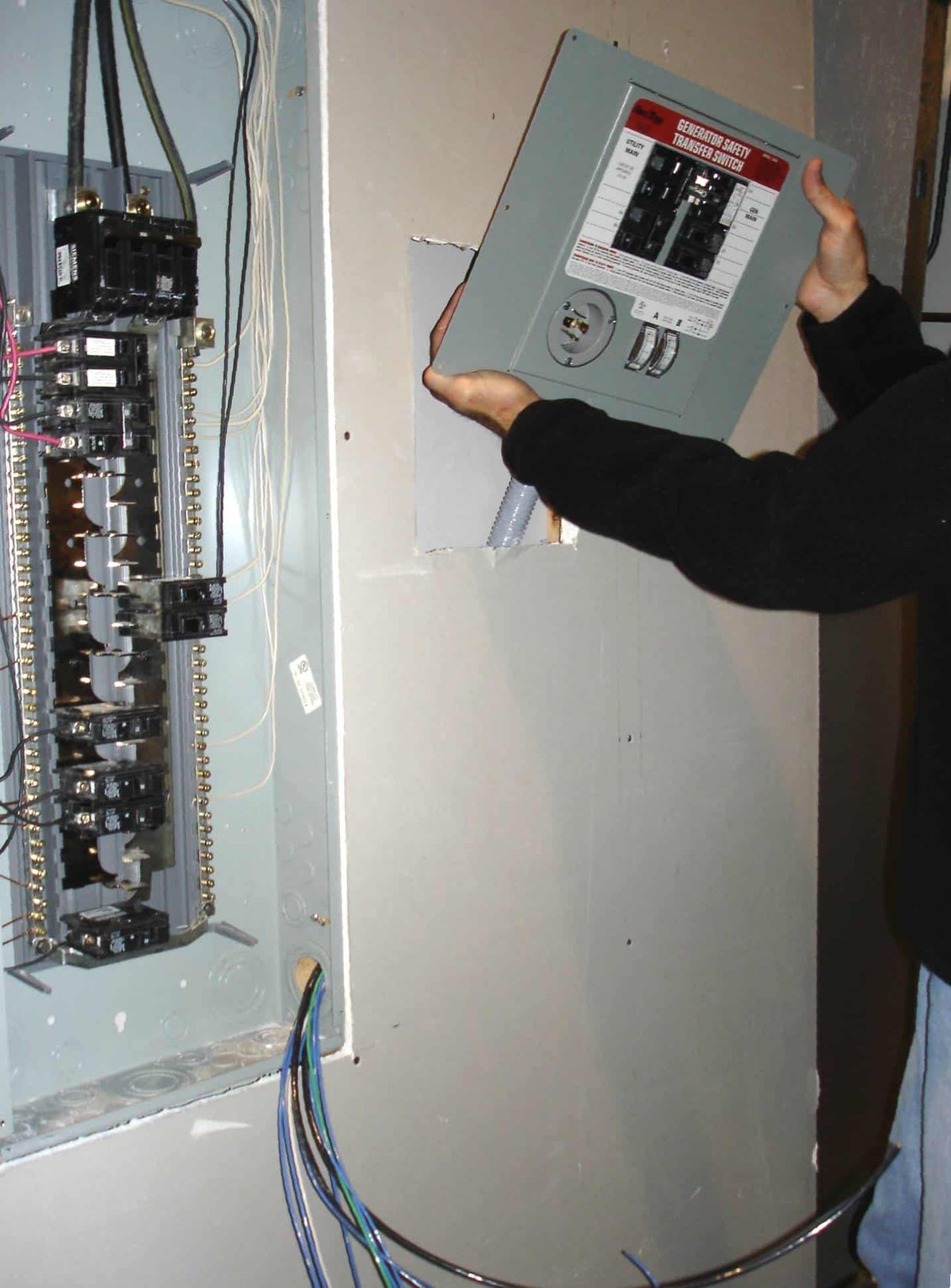
Power outages are more than just an inconvenience; they can disrupt lives, spoil food, and even pose safety risks. For homeowners preparing for the inevitable grid hiccups, a portable or standby generator offers a powerful solution. But connecting that generator to your home's electrical system isn't as simple as plugging it into an outlet. Doing so incorrectly can be incredibly dangerous, a potentially fatal mistake known as "back-feeding." This is precisely why Generator Installation and Transfer Switches are not just a good idea, but a vital safety and operational necessity, ensuring your home power remains secure and your family protected.
This guide will walk you through everything you need to know about transfer switches – from understanding their critical role to the detailed steps of installation. We'll demystify the process, helping you make informed decisions and ensuring your backup power system is safe, reliable, and compliant.
At a Glance: Your Guide to Generator Installation and Transfer Switches
- Safety First: A transfer switch prevents dangerous "back-feeding" electricity into the utility grid, protecting linemen and your home's electrical system.
- Two Main Types: Choose between manual switches (hands-on operation, budget-friendly) or automatic switches (seamless, set-it-and-forget-it convenience).
- Essential for Compliance: Many local electrical codes require a transfer switch for generator connections.
- Planning is Key: Before installation, meticulously assess your power needs, gather the right tools, and understand local permit requirements.
- DIY or Pro? While technically possible for experienced DIYers, professional installation by a licensed electrician is highly recommended for safety and code compliance.
- Test Regularly: Once installed, test your system monthly to ensure it's ready when you need it most.
Why You Can't Just "Plug In": The Transfer Switch Imperative
Imagine trying to drive a car by simply connecting the engine to the wheels with a rope. It's chaotic, inefficient, and wildly unsafe. Similarly, connecting a generator directly to your home's electrical panel without proper isolation is a recipe for disaster. This is where the transfer switch becomes your indispensable power guardian.
The Silent Danger of Back-Feeding
Without a transfer switch, if you plug a generator into a standard outlet (a practice known as "back-feeding"), your generator's power can flow backwards out of your house and into the utility grid. This poses an immediate, lethal threat to utility workers who might be repairing downed power lines, believing them to be de-energized. It’s an invisible killer, and it's why this practice is illegal and extremely dangerous.
A transfer switch acts as a physical barrier, ensuring that your home is either connected to the utility grid or to your generator, but never both at the same time. It’s a simple, elegant solution to a critical safety problem.
Protecting Your Appliances and Staying Compliant
Beyond human safety, a transfer switch safeguards your home's delicate electronics and appliances from potential surges or conflicts between two power sources. It guarantees a clean, controlled transition, extending the life of your valuable equipment. Furthermore, local electrical codes almost universally mandate the use of a transfer switch for any generator connection to a home's main electrical system. Skipping this step isn't just risky; it's a violation that could lead to fines, insurance issues, or worse.
Manual vs. Automatic: Choosing Your Power Guardian
The world of transfer switches generally breaks down into two main categories, each with its own rhythm and benefits. Understanding the difference is crucial for choosing the right fit for your lifestyle and budget.
Manual Transfer Switches: Hands-On Control
A manual transfer switch, as its name suggests, requires you to physically operate a switch or lever to change your home's power source. When the utility power goes out, you'll need to start your generator, then go to the transfer switch and manually flip it from "Utility" to "Generator." When power returns, you reverse the process.
Pros:
- Cost-Effective: Generally less expensive to purchase and install than automatic models.
- Simpler Maintenance: Fewer moving parts means less to potentially go wrong.
- Circuit Control: Often allows you to select specific circuits you want to power, making efficient use of smaller generators.
- DIY-Friendly (with caution): Easier for electrically savvy homeowners to install, though professional help is still recommended.
Cons: - Manual Intervention: You must be home to operate it. Not ideal if you're frequently away.
- Response Time: Power isn't restored until you physically activate the switch and generator.
Ideal For: Homeowners with smaller backup generators, those on a tighter budget, or anyone who is typically home during power outages and prefers direct control over which circuits receive power. It’s perfect for ensuring critical items like the refrigerator and a few lights stay on without overtaxing a modest generator.
Automatic Transfer Switches: Set It and Forget It
The automatic transfer switch (ATS) is the epitome of convenience. It constantly monitors the utility power supply. The moment it detects an outage, it automatically signals your standby generator to start, then seamlessly switches your home's electrical load to generator power. When utility power is restored, the ATS switches back, and signals the generator to cool down and shut off.
Pros:
- Ultimate Convenience: No manual intervention needed, ensuring power even when you're away from home.
- Rapid Response: Restores power much faster than manual options, often within seconds or minutes.
- Maintains Critical Systems: Ideal for homes with essential medical equipment, extensive smart home systems, or businesses where continuous power is paramount.
- Seamless Transition: You might not even notice the power flickers during an outage.
Cons: - Higher Cost: Significantly more expensive than manual switches, both for the unit and installation.
- Complex Installation: Requires more sophisticated wiring and expertise.
- Generator Requirement: Typically used with larger, permanently installed standby generators.
Ideal For: Larger homes, individuals who travel frequently, or anyone for whom uninterrupted power is a non-negotiable priority. It’s the gold standard for a truly hands-off, reliable backup power solution, integrating perfectly with a comprehensive whole house generator backup system.
Sizing Up Your Needs: The Pre-Installation Blueprint
Before you even think about drilling holes or stripping wires, you need a clear understanding of your home's power demands. This critical pre-installation planning ensures your transfer switch and generator are perfectly matched to your needs.
Step 1: Calculate Your Power Appetite
Don't guess which appliances you want to run. Make a list and do the math.
- Identify Critical Circuits: Which items must have power during an outage? Think beyond just lights. This often includes:
- Refrigerator/Freezer
- Furnace/AC (depending on season)
- Water heater (if electric)
- Well pump
- Select lighting circuits
- Medical equipment (CPAP, oxygen concentrator)
- Essential electronics (Wi-Fi router, phone chargers)
- Determine Wattage: Find the running wattage for each item (usually on a label or in the owner's manual). Pay special attention to "starting watts" or "surge watts" for motors (like refrigerators or well pumps), which can be significantly higher than running watts. Your generator needs to handle these momentary surges.
- Total It Up: Sum the running wattage of all critical items you want to power simultaneously. Then, identify the single largest starting wattage on your list and add that to your total running wattage. This gives you a good estimate of the minimum generator output required.
For example, if your critical circuits total 4,000 running watts, and your refrigerator has a starting wattage of 2,000 watts (but only 800 running watts), your generator needs to handle at least 6,000 watts (4000 running + 2000 largest starting surge).
Step 2: Compatibility Check – Your System, Your Generator, Your Switch
Once you know your power needs, ensure everything works together seamlessly.
- Generator Specifications: Confirm your generator's total wattage capacity, voltage output (e.g., 120V, 240V, or both), and connection type (e.g., L14-30R, 14-50R).
- Transfer Switch Amperage and Voltage: The transfer switch must match your home's electrical system and the generator's output. Most homes have 100-amp, 150-amp, or 200-amp main electrical panels. Your transfer switch should have an amperage rating that can handle the circuits you're transferring. It also needs to match the voltage (e.g., 120/240V).
- Circuit Breaker Compatibility: Ensure the transfer switch is compatible with the circuit breakers in your main electrical panel, especially if it's designed to interface directly with existing breakers.
Gathering Your Arsenal: Tools & Materials for the Job
Before you begin any electrical work, collecting all necessary tools and materials is paramount. A well-stocked toolkit prevents frustrating interruptions and ensures the job is done correctly and safely.
Essential Tools You'll Need:
- Basic Hand Tools: Flathead and Phillips screwdrivers (various sizes), adjustable wrench, pliers (lineman's, needle-nose, diagonal cutters).
- Wire Tools: Wire cutters, wire strippers (appropriate for various wire gauges).
- Drilling & Fastening: Cordless drill and a set of bits (for pilot holes, mounting).
- Electrical Safety: A reliable voltage tester or multimeter (absolutely non-negotiable for verifying power is OFF).
- Measuring & Marking: Tape measure, pencil/marker, level.
- Conduit Tools (if required): Conduit bender (for rigid or EMT conduit), hacksaw or reciprocating saw for cutting conduit.
- Utility Knife: For opening packaging, scoring cable sheathing.
Key Materials to Have on Hand:
- The Transfer Switch: The specific manual or automatic transfer switch you've chosen.
- Appropriate Gauge Wires: These connect your generator to the transfer switch and the transfer switch to your main panel. The gauge must match your generator's output and the maximum amperage rating.
- Electrical Conduit: Protects the wiring running from your generator inlet box to the transfer switch, and potentially between the transfer switch and the main panel, if exposed. Choose between EMT (Electrical Metallic Tubing) or PVC conduit as dictated by local codes and environment.
- Conduit Connectors and Straps: To secure conduit runs.
- Mounting Hardware: Screws, anchors, brackets suitable for mounting the transfer switch securely to your wall.
- Cable Ties: For neatly organizing wires inside panels and conduit.
- Generator Inlet Box: A weather-rated outdoor receptacle where you'll plug in your generator's power cord. This should be wired to the transfer switch.
- Safety Gear: Rubber-soled work boots, heavy-duty work gloves, safety glasses, and ear protection. Never compromise on safety.
Preparation is Paramount: Laying the Groundwork for a Smooth Installation
A successful electrical installation isn't just about the wiring; it's about meticulous planning and stringent safety protocols. Skipping steps here can lead to dangerous errors.
Safety First, Always: Your Non-Negotiable Rules
- Kill the Main Power: Before touching any electrical wiring, locate your home's main circuit breaker and switch it to the "OFF" position. This de-energizes your entire home.
- Verify, Verify, Verify: Use your voltage tester to confirm that the power is indeed off. Test multiple outlets and light switches throughout your home. Don't assume.
- Dress for Safety: Don your safety glasses to protect against flying debris or arc flashes. Wear insulated gloves and sturdy, rubber-soled shoes.
- Communicate: Inform everyone in your household that the power will be off and that you're working on the electrical system. Post a "DO NOT TOUCH" sign on the main breaker panel.
Planning Your Power Path: The Strategic Layout
- Choose Your Location Wisely: The transfer switch should be mounted as close as possible to your main electrical panel – typically within a few feet. This minimizes wire runs and simplifies the connection process. It also needs to be easily accessible for operation and maintenance.
- Map Out the Wiring Path: Visualize how wires will run from the generator inlet box to the transfer switch, and from the transfer switch to your main panel. Plan for conduit runs to protect exposed wiring, especially outdoors or in unfinished areas. Consider the shortest, safest, and most compliant path.
- Gather Your Permit Power: Many jurisdictions require an electrical permit for installing a transfer switch. Check with your local building department before you start. This ensures your installation meets local codes and can be inspected for safety. Failing to get a permit can lead to fines, difficulties with home resale, or insurance issues.
The Installation Walkthrough: Connecting Your Home to Backup Power
With preparations complete and safety gear on, it’s time for the hands-on work. This section breaks down the installation into manageable, logical steps. Remember, if any step feels beyond your comfort or skill level, pause and call a licensed electrician.
Step 1: Securely Mounting Your Switch
- Select Your Spot: Confirm the chosen mounting location near the main electrical panel. Ensure there's enough clear space around the switch for access and future servicing, adhering to any code-mandated clearances.
- Mark It Up: Use a level to mark the precise mounting holes on the wall as indicated by the transfer switch's mounting points.
- Drill and Secure: Drill pilot holes for your mounting screws. Securely attach the transfer switch to the wall using appropriate screws and anchors. Ensure it’s firmly fixed and perfectly level.
Step 2: Wiring It Up – Utility, Generator, and Home Circuits
This is the most critical phase. Take your time, double-check every connection.
- Prepare the Wires: Measure, cut, and strip the appropriate lengths of wire for your connections. Ensure you have enough slack, but not excessive wire.
- Install the Generator Inlet Box: Mount the generator inlet box on the exterior of your home in a location that's convenient for your generator, away from windows and doors, and easily accessible. Run appropriate conduit from this box to the transfer switch's location.
- Connect Generator Input: Route the heavy-gauge wires from your generator inlet box through the conduit and into the transfer switch enclosure. Connect these wires to the clearly labeled "Generator Input" terminals on your transfer switch.
- Transferring Circuits:
- Open your main electrical panel.
- Crucially, verify power is OFF again with your voltage tester.
- Identify the critical circuit breakers you want to power with your generator.
- Disconnect the load wires (the wires leading from the circuit breakers to the circuits in your home) from these selected circuit breakers.
- Connect these load wires to the corresponding "Load" terminals within your transfer switch. Each transferred circuit from your home needs a designated spot.
- Connect Utility Power to the Transfer Switch: Run wires from your main electrical panel's utility service (or designated circuit breakers within it) to the "Utility Input" terminals on your transfer switch. This feeds the utility power through the transfer switch before it reaches your selected circuits.
- Connect Transfer Switch Outputs to Main Panel Inputs: The transfer switch then has "Output" terminals for each transferred circuit. These wires will run back to where the load wires were originally connected on the circuit breakers in your main panel. Essentially, the transfer switch is now an intermediary between your selected circuit breakers and the actual circuits in your home, allowing it to choose between utility and generator power for those specific circuits.
- Analogy: Think of the transfer switch as a traffic cop for specific lanes (circuits). It directs traffic (electricity) from either the main highway (utility) or the detour road (generator) into those specific lanes, ensuring traffic never comes from both directions simultaneously.
Step 3: The Moment of Truth – Initial Testing
Once all connections are made and tightened, it's time to test your system.
- Double-Check Everything: Before re-energizing, visually inspect every single wire connection. Are they secure? Are they connected to the correct terminals? No stray strands?
- Restore Main Power: Flip your home's main circuit breaker back to the "ON" position. Your normal household circuits should now be powered by the utility.
- Simulate an Outage: Go to your main electrical panel and flip the main utility breaker to "OFF." This simulates a grid outage for your home.
- Generator Test Run:
- Start your generator (follow manufacturer instructions).
- Plug your generator's power cord into the exterior generator inlet box.
- Go to your transfer switch and flip the switch to the "Generator" position.
- Verify that the selected circuits (lights, refrigerator, etc.) are now receiving power from the generator. Use your voltage tester on an outlet connected to one of these circuits to confirm.
- Return to Utility Power:
- Flip the transfer switch back to the "Utility" position.
- Turn off your generator, disconnect its power cord.
- Go back to your main panel and flip the main utility breaker back to "ON."
- Confirm your home's circuits are now running on utility power.
If everything works as expected, congratulations! If not, proceed to troubleshooting.
Common Hitches & Quick Fixes: Troubleshooting Your Setup
Even with careful installation, issues can arise. Here are some common problems and their likely solutions:
- No Power to Circuits (from Generator):
- Check Generator: Is it running? Does it have fuel? Is it plugged into the inlet box correctly? Is its output breaker ON?
- Transfer Switch Position: Is the transfer switch correctly flipped to "Generator"?
- Wire Connections: Re-verify all connections within the transfer switch and to the generator inlet. A loose connection is a common culprit.
- Generator Breaker: If your generator has its own built-in circuit breaker, ensure it hasn't tripped.
- Circuit Breakers Tripping (on Generator Power):
- Overload: This is the most common reason. You're trying to draw more power than your generator or the selected circuit can provide. Turn off some non-essential appliances.
- Faulty Appliance: Unplug all items on the tripping circuit and plug them back in one by one to identify a potentially faulty appliance.
- Wire Short: While rare in a new installation, a short circuit could cause tripping. If issues persist, consult an electrician.
- Transfer Switch Not Switching:
- Manual Switch: Ensure you're firmly engaging the lever.
- Automatic Switch: If an ATS isn't activating, check its control panel for error codes. Ensure the utility power sensor is properly connected and functioning. This often requires professional diagnosis.
Final Touches & Long-Term Readiness: Securing Your Investment
Your transfer switch is installed, tested, and ready. Now, let’s wrap it up and ensure its longevity.
- Organize and Label: Neatly secure all wires within the transfer switch and electrical panel using cable ties. This improves safety and makes future troubleshooting easier. Clearly label the transfer switch itself and each transferred circuit, indicating its purpose (e.g., "Fridge," "Furnace Fan," "Living Room Lights").
- Perform a Full System Test: Run your generator under a load for an extended period (e.g., 30 minutes to an hour) to ensure stability and catch any intermittent issues.
- Regular Maintenance & Testing: To ensure your system is always ready, test your generator and transfer switch at least once a month. Start the generator, flip the switch, and let it run for 15-20 minutes under a light load. This keeps the generator engine lubricated and verifies the transfer switch is functioning correctly.
- Educate Your Household: Make sure all capable members of your household know how to safely operate the generator and transfer switch. Post clear, concise instructions nearby.
Remember, investing in a robust backup power solution, including proper whole house generator backup solutions, provides true peace of mind.
Frequently Asked Questions (FAQs) – Quick Answers to Your Burning Questions
Can I install a transfer switch myself, or do I need a professional electrician?
While some electrically experienced DIYers can tackle a manual transfer switch installation, a professional electrician is highly recommended. They ensure code compliance, proper sizing, and, most importantly, safety. Automatic transfer switches almost always require professional installation due to their complexity.
How long does a typical transfer switch installation take?
For a manual transfer switch, installation can take anywhere from 3 to 6 hours, depending on the complexity of your electrical panel, the number of circuits being transferred, and the ease of running conduit. Automatic transfer switches, especially for whole-home systems, can take a full day or more.
Is a permit required to install a transfer switch?
In almost all jurisdictions, yes. Electrical work, including transfer switch installation, typically requires a permit. This ensures the installation meets local electrical codes and is inspected for safety. Always check with your local building department before starting work.
How often should I test my generator and transfer switch?
It's recommended to test your generator and transfer switch monthly. Start the generator, transfer power to it, and let it run for 15-20 minutes under a load. This keeps the generator in good working order and verifies the transfer switch functions correctly.
Can I just use heavy-duty extension cords with my generator instead of a transfer switch?
You should never use extension cords to power appliances by running them into your home and plugging them into outlets. This is a fire hazard and still carries the risk of back-feeding if done improperly. Using extension cords directly from the generator to individual appliances is safer, but only for outdoor use and properly rated cords. A transfer switch is the only safe and code-compliant method for connecting a generator to your home's main electrical system.
How do I size my transfer switch?
Sizing depends on the total amperage of the circuits you intend to transfer and your generator's output. For a manual switch, you might choose a panel that accommodates 6-10 specific circuits. For an automatic whole-house system, the transfer switch will match your main electrical panel's amperage (e.g., 200 amp). Always match the transfer switch's voltage to your home's system (e.g., 120/240V).
Your Next Step: Powering On With Confidence
Navigating the complexities of generator installation and transfer switches might seem daunting, but it’s a critical investment in your home's safety and resilience. By understanding the different types of switches, meticulously planning your power needs, and adhering to strict safety protocols, you're well on your way to reliable backup power.
Whether you opt for a hands-on manual system or the seamless convenience of an automatic transfer switch, the peace of mind knowing your home is prepared for any outage is invaluable. If at any point you feel unsure, remember that a licensed electrician is your best resource, ensuring a safe, compliant, and efficient installation. Don't just prepare for an outage; prepare to power through it, confidently and safely.